
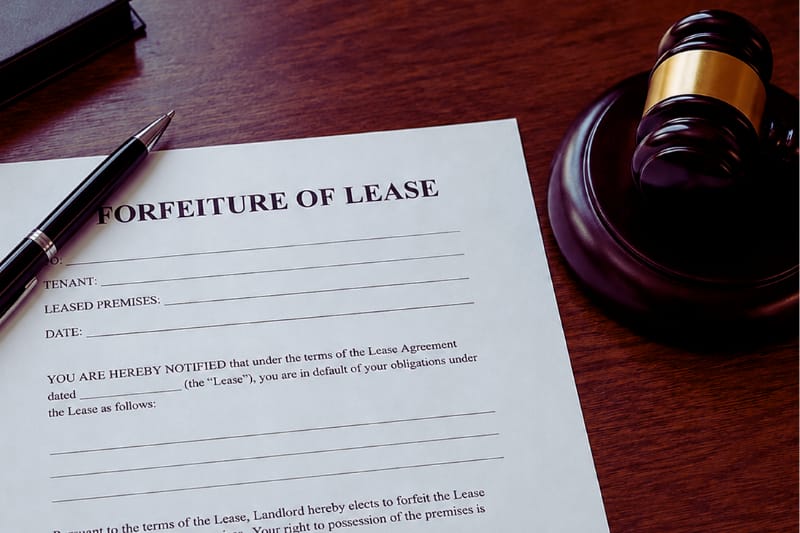
When a tenant is in breach, many landlords turn to forfeiture of commercial lease as a route to regain possession of their premises.
We understand how stressful the situation is: you need to retake control of a property, protect your rental income, and avoid unnecessary delays. Left unchecked, the breach can escalate and make recovery harder.
At Strikes Property Services Group, we manage the forfeiture process so you can return property quickly and legally.
Our service includes:
Strikes Property Services Group is trusted by commercial landlords, property managers, landowners, lettings agents, legal companies and solicitors to return property quickly and legally
Get in touchWe review the lease to confirm a forfeiture clause and assess whether the breach qualifies.
You complete the instruction form and provide evidence of the breach, such as rent arrears schedules.
We book the locksmith and our agent and confirm the appointment with you.
We change locks, take an inventory of goods, and secure the premises.
We issue any required legal notices and notify parties such as mortgagees, subtenants and insurers as instructed.
We send a report with photos and handle post-forfeiture matters, including supervised goods removal or tenant liaison where needed.
Strikes Property Services Group is one of the UK’s leading property dispute resolution agencies.
Our team is specialised in forfeiture of commercial lease, with a fully legal approach as a core part of the service. This helps you retake control of your property without lengthy court proceedings. We also provide a fully comprehensive service, covering everything from providing evidence of breaches to changing locks, securing premises, informing authorities and negotiating with tenants.
We take a pragmatic and legal approach to protect your commercial interests and reduce disruption.
*Services marked with an asterisk may not be included as part of the core service, and charged on a case-by-case basis.
Contact us for our current services feesOnly if it contains an express forfeiture clause, which sets the grace period before you can act – commonly 14 or 21 days of unpaid rent. Where the breach is rent, no prior notice is required; for anything else – subletting, alterations, disrepair – a section 146 notice must be served first, with time given to remedy. We check this at lease review, and where there’s no forfeiture clause or a residential element to the building, we’d usually advise a court possession claim instead.
Not by peaceable re-entry. Section 1(2) of the Protection from Eviction Act 1977 makes it a criminal offence to forfeit by re-entry where any part of the premises is let as a dwelling, and where a property is mixed the prohibition covers the commercial part too. If there is a flat above, or anyone living on site, the lawful route is court possession proceedings, which we handle in house with our consultant solicitors rather than referring out. Tell us at the lease review.
Possibly. If you have demanded, accepted or banked rent after learning of the breach, you may have waived the right to forfeit for it – waiver is the most common reason a forfeiture fails. Stop demanding or accepting rent and avoid any correspondence treating the tenancy as continuing, then speak to us. Where waiver has already happened, we’ll tell you plainly – you’ll usually need to wait until the next rent payment falls due before the right to forfeit can be relied on again.
Our forfeiture fee starts from £640 plus VAT, covering the agent, office time, the forfeiture and torts notices, overseeing the locksmith, securing the building, photographs and the full report; locksmith attendance itself is charged separately. There’s no statutory fee scale as there is with CRAR, but costs can often be recovered from the tenant through the arrears claim or as a condition of relief from forfeiture. If entry can’t be gained on the day, an abortive attendance fee of £375 applies, subject to our terms and conditions.
A copy of the lease, evidence of the breach, and a completed instruction form. Where the breach is non-payment, that evidence is a rent arrears schedule showing what is owed and from when. You’ll also need written authority to instruct us, proof of title, keys or alarm codes for the property, and a site contact for the day of attendance. We check the forfeiture clause and the grace period against it before booking anything, so a complete instruction is what makes the attendance date firm.
We attend outside occupied hours, usually early morning, with a certificated enforcement agent and a locksmith. Instruct us before 3pm with everything complete and we’ll typically attend the following morning. Locks are changed, an inventory of goods taken, the premises secured and a forfeiture notice left at the property. You’ll then receive a confirmation email the same day setting out what happened, followed by the full report with photographs the same day or the following morning.
They remain the tenant’s property. Forfeiture gives you the premises, not what is in them, and disposing of goods without following the right process exposes you to a claim. We take a full inventory with photographs at re-entry and secure the premises, then serve a torts notice giving 14 or 21 days for collection – if the goods aren’t collected in that time, they can be stored, sold or destroyed. Supervised removal is charged in addition to the forfeiture fee and includes a full inventory and photographic evidence.
They can apply. A tenant, subtenant or mortgagee may ask the court for relief from forfeiture, generally within six months, and where the breach was rent arrears the court will usually grant it if they pay the arrears, interest and your costs. We document the lease review, waiver check and state of the premises with photographs and a dated notice, and if relief is applied for we provide full support – witness statements, attendance records and photographic evidence – included as part of the service.
Rapid
Response
Always
free advice
Legal & ethical
approach
In-house Authorised
HCEO
Guided at
every step







38 Northgate, Newark NG24 1EZ
United Kingdom
© 2026 Strikes Property Services Group Ltd
Privacy Policy · Complaints Procedure · Cookie Policy · Terms of Use · Sitemap


